Sync All Your Tools with CSNook
Bring your entire customer experience ecosystem together by seamlessly integrating the tools you are already using with CSNook. Whether it is CRMs, product analytics, support platforms or even communication tools, smooth data flows through CSNook ensure nothing falls through the cracks. Give your team one single source of truth to manage every single customer relationship.
Connect Every System That Touches the Customer
CRM Integrations
Sync account details, contacts, opportunities, and lifecycle stages from your CRM to keep customer records accurate and up-to-date.
See Churn Risk
Think you might have disengaged users? Confirm it through trend analysis, activity drops, and sentiment changes so you can intervene in time.
Survey Your Customers
Couple data metrics with the actual lived experience of your customers to evaluate whether each account is on track or not.
Track Revenue Impact
Note how customer satisfaction metrics connect with renewals, expansions, and overall revenue health across accounts and segments.
Quarterly Business Reports
Identify standout moments, performance improvements and operational insights through consistent profitability-focused assessments.
Is Your Team Effective?
Review how CSM actions influence outcomes, track the completion of tasks and identify opportunities for improved workflow efficiency.
Maintain Centralized Customer Insights
Operate beyond blind spots when you’re using a modern client relationship partner like CSNook. Allow your CSM function to stay aligned with consistent data, enabling faster decisions, cleaner handoffs, and more confident customer engagement.
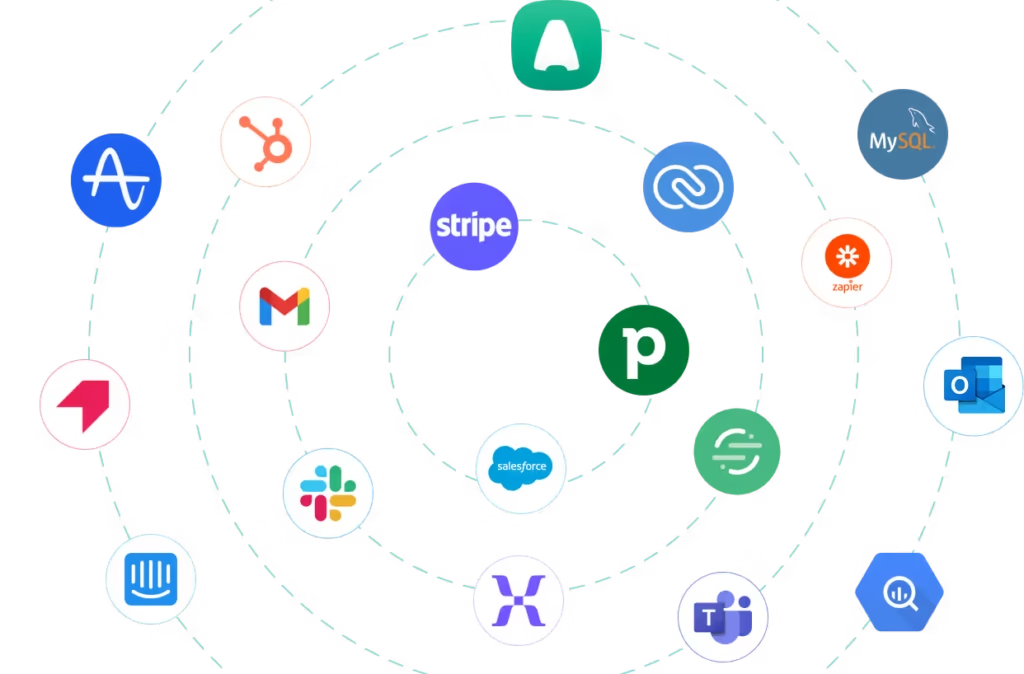
Our Existing Tech Stack
See our pre-existing integrations across tools most commonly used by CS teams.
Flexible Integrations for Growing Teams
Whether you’re beginning with a few core tools, or running your CS team with an enterprise tech stack, CSNook is built to scale with your business. Customize workflows or extend your functionality through APIs, without disturbing any part of your existing customer operations.
Frequently Asked Questions
What type of integrations are supported on CSNook?
CSNook supports integrations across the full customer stack, including CRMs, product and usage analytics tools, support platforms, communication systems, billing software, and data warehouses. This means all customer-related information becomes connected and accessible from a single platform, without the need for manual matching.
This unified visibility improves collaboration, reduces errors and enables more informed decision-making across departments — whether it is customer support or product teams.
Can CSNook integrate with custom or internal tools?
The platform comes with flexible APIs and data integration options so that teams can connect custom-built solutions or internal tools easily, plugging their data directly into the common repository on CSNook. That’s how it fits seamlessly into existing workflows, even in complex or highly customized tech environments.
This level of flexibility built within the CSNook dashboard is what allows it to provide customers with continuity, while enhancing their overall data ecosystem.
How do integrations improve customer success outcomes?
When data exists on many different platforms, it continues to be siloed and unconnected to each other. Everyone operates on assumptions, unless they want to keep digging for every single insight across tools. CSNook provides complete visibility into usage, support history, and revenue data so that CS teams can act proactively, personalize engagement, and reduce churn risk.
Are integrations secure and reliable?
Yes, all integrations established with CSNook are both reliable and secure. We follow industry-standard security practices to protect customer data through the means of secure authentication, controlled access, and reliable data syncing.
This helps in meeting compliance requirements and data protection norms, while securing the interest of customers.
How to manage multiple API integrations efficiently?
Managing multiple API integrations efficiently requires a centralized system that consolidates data flows and ensures consistency across tools.
CSNook simplifies this by acting as a single source of truth, where all integrations are unified and monitored in one place. This reduces duplication, minimizes errors and eliminates the need for constant manual syncing.
What’s more? CSNook offers a two-way API integration system which means you can add any new integration you need to the stack easily, and whenever you want. Removing integrations is also just as easy.
How do third-party integrations improve internal workflows?
Third-party integrations improve internal workflows by connecting siloed systems and enabling seamless data sharing across teams. This means all teams from customer success to sales are able to see the same information as it updates.
The main advantage here becomes one of coordination within the organization. On a secondary level, processes can hasten, with less time spent on fixing errors due to miscommunication.
Automation across integrated tools also reduces repetitive tasks, improves efficiency and allows teams to collaborate more effectively while delivering better customer outcomes.