
When going for a new product, one of the first things a customer searches for is other customers’ reviews. A genuine positive feedback gives us a push to purchase the product. This is applicable in every scenario.
Almost every website has this feedback in the form of customer testimonials. They are like a strategic asset and have a purpose of –
- Building trust
- Reinforcing value
- Supporting acquisition and retention efforts
- Supporting customer success by showcasing real outcomes and value realization
This article aims to explore –
- What testimonials are
- Why they matter
- How to collect them
- How to use them effectively
Through the article, we will also understand how it adds value to your business rather than just filling up the webpage.
We will also look at how Customer Success plays a role in creating these testimonials, as they are often a result of successful customer journeys rather than isolated feedback.
What are Customer Testimonials
These are customer statements describing their experience with the product and service. These can be in various formats, be it –
- Written quotes
- Video clips
- Case study narratives
- Short social media posts
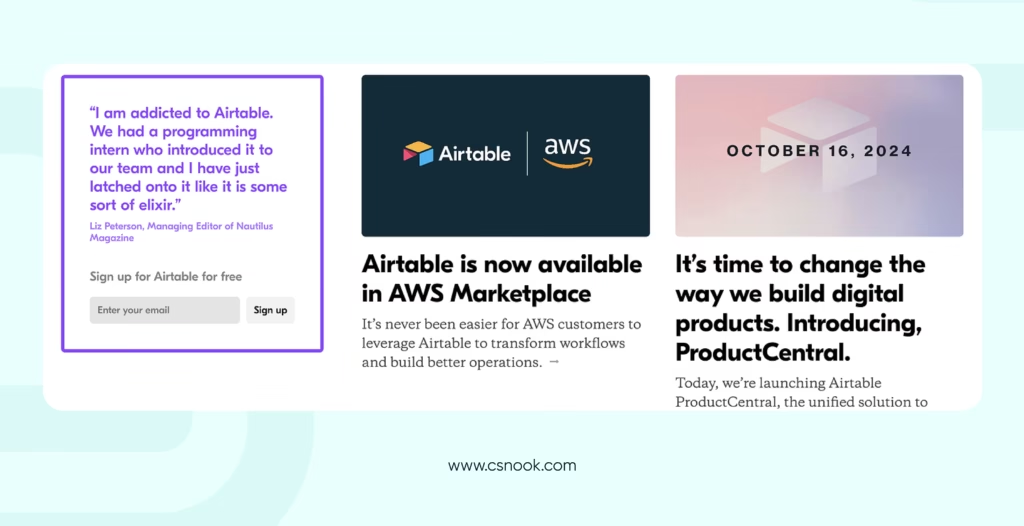
The formats may vary, but the purpose is one, and that is to show real-world customer affirmations of satisfaction and outcomes. They are the first hand reviews are like social proof that the prospective customer might relate to or might get attracted to the product, which reflects on the actual customer experience.
From a Customer Success perspective, these testimonials indicate that a customer has successfully adopted the product and achieved value from it.
Additionally, acquiring new customers costs 5x more than retaining existing ones. Customer testimonials, hence, act as a tool in this scenario. Let us understand why.
Why are Customer Testimonials Valuable?
Testimonials serve a purpose in the customer lifecycle. According to research, 79% of customers give reviews as much credit as they do to word of mouth. This is why the display of feedback can boost the conversion rate by up to 2701%.
Let us understand the value of testimonials in greater detail.
Building Trust and Reducing Uncertainty
When customers see testimonials from people like them, they lower their psychological barrier and get a step closer to considering the product. It is like a reassurance that if another customer like them succeeded with a product, they can too.
This reassurance is often rooted in the outcomes driven by Customer Success teams who help customers reach that stage of success.
What are the benefits of this?
- The business can show real outcomes rather than just making claims
- Risks that are commonly perceived by buyers are reduced
- It reinforces the credibility of your product or services
Supporting Decision Making
Testimonials act like a contextual example and show how customers overcome challenges using the product and its features. This shortens their decision-making process as well. Nearly all B2B buyers (92.4%) actively read online reviews and testimonials before finalizing a purchase decision.
These examples often mirror real journeys guided by customer success teams, making them more credible and actionable.
What are the benefits of this?
- Providing relatable examples
- Highlighting use cases beyond the standard feature list
- Accelerating purchase confidence
Encouraging Retention and Expansion
Customer testimonials are not just for new or potential customers. When customer stories are shared internally or for renewal communications, customers are more spirited. This supports retention and potential upsells as the clients expand the usage of the product.
Humanizing Your Brand
Authentic testimonials give your brand a human voice. In a world where AI is being used even for content, highlighting real people instead of just marketing language builds emotional connection. It makes your brand more relatable and trustworthy.
In fact, incorporating authentic human storytelling elements into brand content raises audience interaction levels by 63%.
Customer Success plays a key role here by building strong relationships that encourage customers to share genuine experiences.
What this brings to the table is –
- Authenticity to your messaging
- Strengthens the brand personality
- Enhanced sense of customer empathy
How to Collect Strong Testimonials
There is a proper process for collecting customer testimonials. There is also a proper as to when and how to ask for them.
Timing Matters
Asking for a testimonial before they even see the value of the product is too early and could even lead to shallow responses. The best moment would be when they achieve a milestone because of the product. This is when the customer satisfaction is genuine and evident.
Choose the Right Customer
Not every customer will provide a useful testimonial. Look for customers who –
- Who consistently use your product
- Who have achieved measurable results
- Who are advocates and speak positively in calls or feedback channels
Targeting the right individuals increases the chance of impactful testimonials.
These customers are typically those with high engagement and strong product adoption, often identified through customer success metrics.
Make It Easy
Customers are busy and wouldn’t go for a process that is time-consuming and tedious. Hence, it should be convenient for them. To do that –
- Provide a short questionnaire
- Offer to draft the testimonial for approval
- Allow video recordings or simple written responses
Ease of participation improves both quantity and quality of testimonials.
Customer success managers can facilitate this process smoothly since they already have an established relationship with the customer.
Using Testimonials Across the Customer Journey
A testimonial isn’t just for the homepage. When placed in contextually relevant moments and stages, they lead to confidence and support key decisions.
For example, Intercom places testimonials exactly where decisions happen. They embed short quotes on feature pages, near CTAs, and within pricing sections. Each testimonial is tied to a specific feature or benefit. This reduces friction at important decision points and provides value with context.
Top of Funnel – Awareness Stage
Short, impactful quotes near CTAs or on landing pages can capture attention and build trust early in the buyer journey.
These are usually high-level outcomes surfaced from successful customer experiences.
Middle of the Funnel – Consideration Stage
Here, testimonials that discuss specific problems and outcomes help prospects see themselves in the story and justify deeper engagement. This is especially useful for SaaS tools when they want to evaluate value.
These stories often reflect real use cases identified and nurtured by Customer Success teams.
Bottom of Funnel – Decision-Making Stage
Strong testimonials on pricing pages or in sales decks can be like a nudge for a hesitant buyer. Showing outcomes that mirror the prospect’s own goals creates relevance and increases conversions.
At this stage, testimonials act as proof of value already delivered to similar customers.
Customer success teams can actively use these testimonials in renewal conversations and QBRs to reinforce value.
Retention and Renewals
Testimonials also reassess current customers’ confidence in their decision to renew or expand. Hearing how others continue to find value can reinforce long-term loyalty.
Avoiding Common Pitfalls
Even good testimonials can fall flat if misused.
- Overuse: Too many testimonials placed everywhere, without strategy,3 can dilute impact and overwhelm readers.
- Generic Praise: Statements like “great product” don’t provide useful information. Testimonials should reflect the value received, not just satisfaction.
- Lack of Context: Testimonials without practical details or relevance can just seem like marketing moves.
Weak or generic testimonials can also indicate that customer value has not been clearly captured or communicated.
To Conclude
Customer testimonials are valuable because they bridge promise and proof. But their power isn’t automatic. Strong testimonials come from intentional collection, thoughtful placement, and authenticity.
More importantly, they are often the outcome of effective Customer Success efforts that ensure customers achieve real results.
When used well, they can enhance trust, support decisions across the customer lifecycle, and become one of the most effective tools for growth.
In that sense, testimonials are not just marketing assets, but reflections of how well your business delivers and sustains customer value.
Common Questions
How can customer testimonials improve conversion rates for service-based businesses?
Customer testimonials reduce hesitation by providing real-world validation. Service-based businesses help prospects understand outcomes, not just offerings. When placed near decision points such as pricing or contact forms, testimonials can increase conversions by reinforcing trust and providing proof of consistent delivery.
What makes a customer testimonial more credible and trustworthy?
A testimonial becomes more credible when it includes specific results, the customer’s role or industry, and a clear context of use. Generic praise is less reliable, while detailed experiences suggest a sense of authenticity. Adding a name, company, or even a photo further strengthens trust and relatability.
Where should customer testimonials be placed for maximum impact on a website?
Customer testimonials work best when placed at high-intent touchpoints such as landing pages, pricing sections, and service pages. Positioning them near calls-to-action helps reduce friction. Contextual placement—matching the testimonial to the specific feature or benefit—makes them more relevant and persuasive.
How do you ask clients for customer testimonials without making it awkward?
The best approach is to ask after a successful milestone or positive outcome. Keep the request simple and specific, such as asking what problem was solved or what result they achieved. Offering prompts or drafting a version for approval can make the process easier for clients.
Can customer testimonials help build long-term client relationships and referrals?
Yes, testimonials reinforce positive experiences and remind clients of the value they’ve received. Featuring them in newsletters, case studies, or community spaces can strengthen relationships. They also encourage referrals, as satisfied clients are more likely to advocate when their experiences are acknowledged and shared.


