
It takes a CSM three days to import data from six separate systems and produce a 40-slide PowerPoint presentation. The customer has only 20 minutes of attention in the actual meeting but asks, “So what does this mean for us?”
That is not a quarterly business review. That is a waste of time.
A real QBR is more than just a “presentation” of the data. It is an open strategic discussion where you move from being a vendor to being a trusted partner. It identifies issues before they arise, demonstrates your value clearly, and creates natural opportunities for expansion.
This guide will explain what QBR’s really are, why they are important, and how to run QBR’s that help retain customers and grow your business.
What is a QBR?
The quarterly business review is a strategy session that takes place every quarter between the customer success manager and the customer in order to measure performance, add value, and prioritize future actions.
However, there is one catch: most teams get the meaning right and the implementation horribly wrong.
To understand what a QBR is, let’s understand what it’s not. What a QBR is not, for starters, is an update. It’s not a troubleshooting session for technical problems. It’s not even dumping information on someone and then giving a hard sell.
The real deal QBR is a discussion in which you move from the role of vendor to that of trusted partner. It revolves around asking just one key question: “Are we helping you to meet your objectives, and what should happen next quarter?”
What it Looks Like in Practice
This is how it works out in real life. The account manager realizes that a customer is only utilizing 30% of the product. During the quarterly business review, it comes to light that the customer’s original goal is entirely different now from what it was at the time of signing up. Rather than focusing more on the use case, the CSM turns the tables around for the customer by showing them how the product can help achieve their new goal.
And that is the difference between selling and understanding the customer. The first QBR occurs 60-90 days after the contract has been signed. This is an important phase because the early quarters determine customer retention.
Why QBRs Matter for Customer Success
Here is a figure you cannot ignore: CS teams with continuous QBRs keep NRR between 15 and 20 points more than those with reactive methods only.
Because QBRs identify issues in Q2 rather than Q4 (when renewal takes place).
The Churn Prevention Angle
In the third month, the customer disengages and starts showing decline in their usage. In the reactive approach, you only find out when you are trying to renew. But by then, it’s too late. But here, in the approach, you discover that in the quarterly business review. You dig into it. You fix it and prevent customer churn.
The Harvard Business Review on the ‘Economics of Customer Loyalty’ mentions that getting a new customer is 5 to 25 times more expensive than keeping an existing one. Using the QBR model gives you the opportunity to identify early signs in month three to save your money from walking away.
The Expansion Angle
If you have demonstrated ROI, expanding comes naturally. No need to brace for an uncomfortable discussion. Instead, the client thinks, “Of course, we should be expanding.”
The Leadership Alignment Angle
By conducting strategic checks in progress, you can always remain in touch with decision-makers. If there is any change in priority, you will already have your place at the table.
The QBR Structure That Actually Works
An effective QBR meeting agenda is a simple one. In other words, you should pay attention to keeping it short. Ideally, it should last about 45-60 minutes.
Executive Summary (5 minutes)
A brief introduction to everything that has occurred, changed or remained the same since our last meeting. Open up the quarterly business review discussion, because it’s meant to be a two-way conversation, not a presentation-type meeting.
Performance Review (10-15 minutes)
Develop an effective and well-researched performance evaluation:
- Collect the customer information.
- Track your results versus your objectives.
- Celebrate successes achieved but also make sure to address shortcomings openly.
- As they say, “A picture is worth a thousand words.” Instead of using text-heavy data tables, use graphics such as charts and graphs.
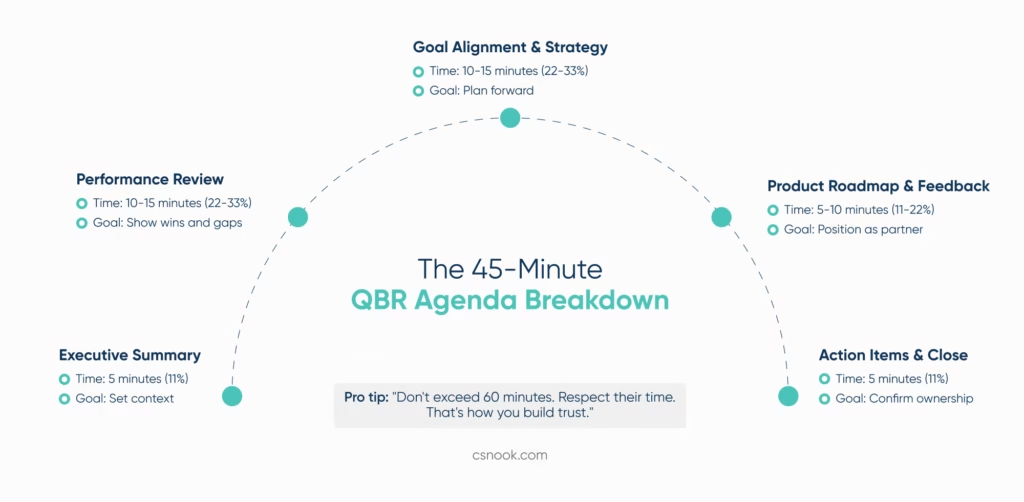
Goal Alignment and Strategy (10-15 minutes)
Most QBRs spend 80% of their time assessing previous quarters’ results. You want to focus on what’s going forward. For example, what is coming up for you? What changed from last quarter? How can we help you reach your future goals?
Building partnerships happens here.
Product Roadmap and Feedback (5-10 minutes)
Outline the new product features or enhancements that are on the roadmap and align with the client’s objectives. This is where you solicit feedback and input from your clients to create a sense of partnership versus simply being a customer.
Action Items and Close (5 minutes)
Summarize the key takeaways from the QBR and give ownership of each action item to the correct person. Additionally, identify the next quarterly business review date.
Common QBR Mistakes and How to Avoid Them
Usually, QBR’s share the same issues. Early identification is the key.
1. Emphasizing the Past Rather than the Future
Bad QBR — 50 Minutes of “What we did” (Past accomplishments)
Good QBR — Use data from the past to help shape future strategies
For example, “Bad customer health score in the past? Here’s what we can change to help increase it”
Most customers don’t care what has occurred in the past. They want to know what the future will be.
2. Talking Too Much
Do you remember that 43:57 ratio? The average CSM ends up with a 60% (talking) and 40% (listening) ratio for their first QBR. That’s like giving a presentation.
3. Treating It Like an Upsell Opportunity
A QBR that feels like a sales call is the quickest way to kill the deal. When you lead with outcomes, you will find that upsells happen organically. If you have to force it, you’ll lose all trust.
4. Sending Someone Who Doesn’t Know the Customer
This creates an immediate sense of disrespect. Instead, make sure the person you send is senior in your organization, prepared for the quarterly business review meeting, and truly cares about building upon the existing customer relationship.
5. No Follow-Up
After your call, what happens? The action items go away. If the QBR is not followed up on and is just a meeting, it’s not considered a strategic touchpoint.
How to Run Effective QBRs
Creating a successful game plan is only half the battle. Executing it successfully is the most critical factor.
Preparation (1-2 weeks before)
- Compile relevant information (product use, support tickets, NPS, engagement metrics, wins, challenges, trends).
- Understand what has changed in the business since last quarter (new leadership, budget cuts, new strategy).
- Produce 3-5 data visualizations. Not 30 PowerPoints.
During the Meeting (45-60 minutes)
- Start off friendly and focus on building rapport. Instead of thinking of them as just another account, think of them as a valuable relation, as a human.
- Celebrate customer success and make sure they feel and recognize the value they’ve already created. Let them see the good that has happened before addressing the missed opportunities.
- Be straightforward about weaknesses. “We were hoping to see more of you utilize our product by now. Let’s look at why together.”
- Listen more than you speak in the quarterly business review and ask open-ended questions.
- Make the connection between your product and their success look simple. This means not only showing them data, but also what it means.
- Present your roadmap as collaboration in planning, not a sales pitch. “This is what we are doing, how does that fit within where you want to go?”
After the Meeting (same week)
- Send a recap email with key points, action items, and owners.
- If you have any promised follow-ups or resources, share them now.
- Schedule the next QBR before leaving. Don’t wait until next quarter to set up this meeting.
- Close the loop on previous action items: “We said we’d do X and here’s where we ended up.”
Conclusion
QBRs do not need to be mundane and dull or covertly disguised sales pitches. If done the right way, these can become growth sessions that help build relationships, demonstrate value, and uncover new opportunities along the way.
These businesses making quarterly business reviews into their customer retention and growth engine are not doing anything fancy. They are just asking the right questions, listening intently, and being outcome-oriented rather than output-oriented.
Common Questions
What is a QBR and how often should you conduct them?
The QBR (quarterly business review) is a strategy session conducted every quarter between a CSM and their customer to assess the performance, showcase value, and agree on the way forward. The first QBR is conducted 60-90 days from contract signing — the period when retention becomes critical.
What’s the difference between a QBR and a regular check-in call?
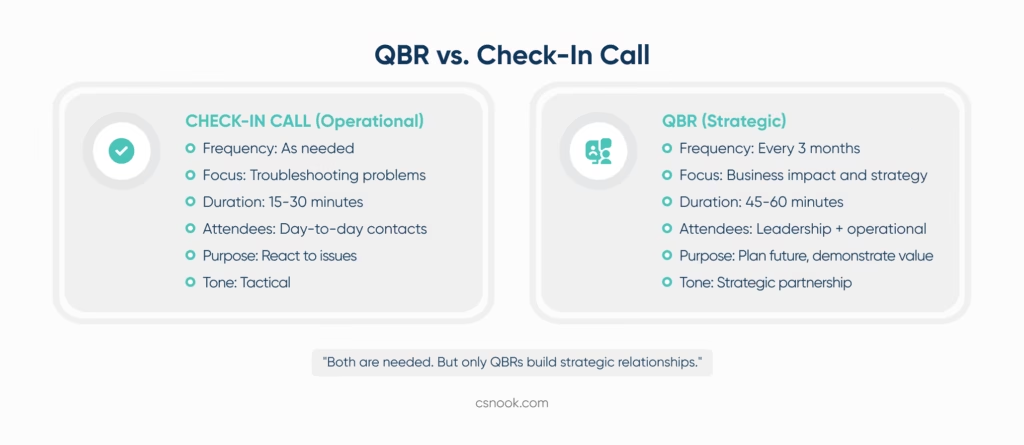
The check-in call is reactive in nature — fixing issues that occur. The business review quarterly is more strategic and proactive in nature — taking into account the impact on the business and showcasing ROI while planning for the future. The QBR has a leadership presence; check-ins usually have people who work regularly.
How should you structure a QBR agenda?
An effective QBR agenda should include 5 elements:
-Executive summary (5 minutes)
-Performance review (10-15 minutes)
-Goal alignment and strategy (10-15 minutes)
-Product roadmap and feedback (5-10 minutes)
-Action Items (5 minutes)
Total time: 45-60 minutes.
Start with successes, be frank about weaknesses and listen more than you speak (43:57).
What’s the biggest mistake teams make when running quarterly business reviews?
Presentations rather than dialogue sessions. The majority of CSMs spend over 60% of their time speaking, recounting past events, or suggesting upsell opportunities. In real QBRs, this gets reversed. You listen for 57%, look forward to the next quarter, and expand the value proposition in an organic manner.
How do QBRs drive customer renewal and expansion?
ROI is clear in QBRs prior to any renewal discussion; this way, the need for renewal is justified. Expansion opportunities will come out of QBRs organically as soon as usage issues and unmet needs are highlighted. Also, executive connections can be formed through QBRs, where decision-makers are engaged.