Multiple tabs open to keep a tab on clients. Switching from one screen to another. Keeping track of several spreadsheets for multiple clients. Half of the time is spent on CRMs, and the other half on calls. All this to gain some knowledge about the customer’s health. Mostly when it gets too late.
The above-mentioned issues might sound familiar. And chaotic.
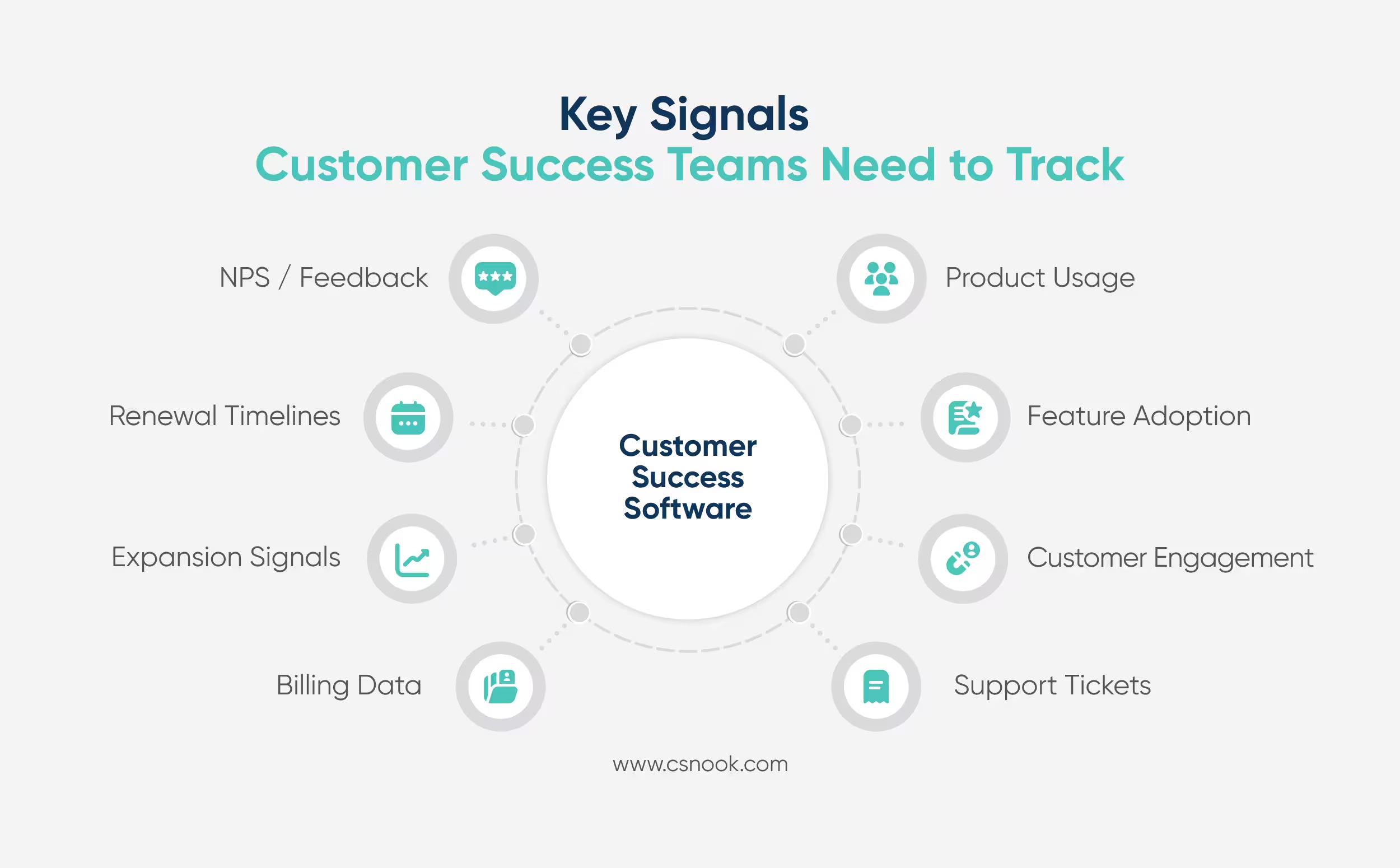
Customer success was built for relationships, but now it only runs on signals such as –
- Product usage
- Engagement patterns
- Renewal timelines
- Expansion indicators
All this information is available, but in different tools. Coordinating these tools is time-consuming and makes all these efforts almost ineffective. This makes the customer success teams reactive when, in reality, they should be proactive. In fact, 66% of CSMs say they spend a significant portion of their workday on repetitive admin tasks
This is where customer success software comes into the picture. It brings all the signals in one frame. It ties data, context, and action together so that teams can –
- See risks early
- Prioritise intelligently
- Engage before issues are escalated
This is when CS teams finally shift from being reactive to being proactive. Let us try to understand this in detail.
What is Customer Success Software?
This software, also known as a customer success platform, is a system meant to help organizations in the management of post-sales customer lifecycle with structure and intelligence.
This is a theoretical definition. Practically, a CSS does three major things, and those are –
- It unifies customer data across tools
- It recognizes and interprets signals that indicate risks or opportunities
- Helps in the implementation of action through workflows and automation
This software is not just a reporting tool, nor is it just an extension of what a CRM does. While it helps with the two actions as well, it is simply an operational layer that pulls raw customer data and helps in executing strategic actions.
It answers questions like –
- Which accounts are at risk before they say it themselves?
- Which customers hint at expansion?
- Where is onboarding friction slowing time-to-value?
- What behaviour is associated with retention?
Without customer success software, teams operate with partial visibility. With it, on the other hand, they can operate in patterns.
Why Customer Success Software Matters?
Many companies go for manual processes when they begin. They use spreadsheets, emails and separate tools that help with support, surveys, and engagement. This approach may only work when the scale is small, but it will not be able to sustain as the customer base grows.
Here is how a customer success platform helps –
Proactive Issue Identification and Retention
By monitoring customer behaviour and engagement signals, a customer success platform calculates health scores that help in identifying where the risk is coming from. Through this, CS teams can intervene early — even before the customer contacts the support team, rather than reacting after a churn decision is made.
For instance, a SaaS provider from the mid-market may see a drop in product usage three months before the renewal. With the help of customer success software, as soon as this dip in usage is detected, an alert is triggered, and a playbook is tailored. This ensures that the customer success team can re-engage the client in a structured way.
When intervention takes place beforehand, the chances of churning are reduced. This is one of the most powerful levers for predictable revenue.
As per Harvard Business Review reports, increasing customer retention rates by 5% increases profits by 25-95%.
Enabling Teams to Focus on What Truly Matters
Multiple manual tasks consume hundreds of hours across a team. These could be –
- Sending onboarding emails
- Chasing renewal reminders
- Creating status reports
CSPs automate this pattern using playbooks, triggers, and workflows. This gives CSMs the time to focus on high-value strategic work that must be done on priority.
Better Expansion and Revenue Growth
Customer success teams’ job is not only to retain customers but also to upsell and drive growth through existing accounts. They analyze –
- Usage trends
- Feature adoption
- Engagement patterns
Customer success software helps in the identification of cross-sell or upgrade opportunities that may otherwise go unnoticed.
Let us understand this through a use case. For instance, a SaaS analytics platform finds a segment of customers on the brink of exceeding user seat limits, which is an early signal of capacity demand.
With insights from the CSP, the success team can recommend plan upgrades at the right time, increasing net revenue retention (NRR).
According to a report by Forrester, a customer success platform can yield a 91% return on investment within three years.
Cross-Organizational Alignment
Customer success software aligns organizations and, hence, is often considered to be the “single source of truth.” It centralizes customer data and makes it shareable across departments, be it product, support, sales, or even marketing.
This promotes a sense of collaboration by providing shared visibility into health scores and usage, reducing churn, and aligning teams on common retention and growth goals.
Core Features That Turn Data Into Value
Of course, not all customer success software is built the same. However, most high-functioning platforms share certain features. These are foundational and advanced capabilities that not only enhance strategic impact but also provide convenience.
Here are certain features that matter the most in practice.
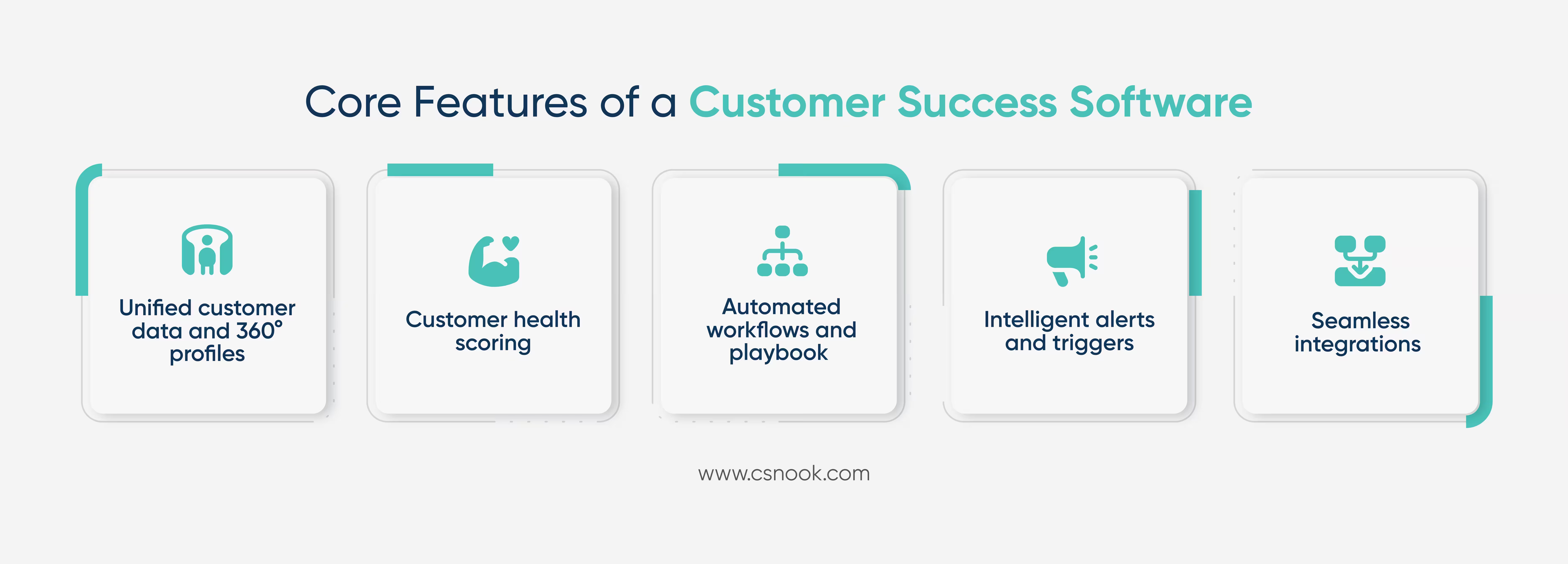
Unified Customer Data and 360° Profiles
Great CSPs centralize disparate data like –
- CRM
- Product usage
- Support tickets
- NPS
- Feedback
into rich customer profiles. When the view is unified, there is contextual engagement, which should ideally always be preferred over having partial information.
Customer Health Scoring
Health scores quantify risk and opportunity by incorporating usage patterns, support issues, sentiment, and other signals.
- High scores indicate strong adoption and likelihood to renew.
- Low scores highlight churn risk.
Predictive analytics helps do so. Modern customer success software leverages machine learning to forecast churn risk. Additionally, they also recommend the next best and relevant actions. This makes customer success far more predictive than reactive.
Automated Workflows and Playbook
As teams grow, inconsistency becomes a silent risk.
One CSM might follow a structured onboarding process. Others may rely on instinct. Some may escalate risk immediately. Another waits until renewal pressure keeps piling. All have their own way of coping and dealing with their methods. But the processes should be united.
A customer success software role here is to enable standardized playbooks.
This is not because human judgment is questioned here, but because the aim is to reduce operational differences.
Routine processes like onboarding in a proper sequence, renewal reminders, and risk escalation steps can be automated or semi-automated. This ensures consistency and reduces the chances of missed reachouts.
Intelligent Alerts and Triggers
Churns are never overnight surprises. Subtle behavioural changes must be observed and taken into consideration. These could be –
- Reduced feature usage
- Stakeholder turnover
- Delayed responses
- Declining engagement
Real-time alerts help teams take timely action rather than waiting for scheduled check-ins. These alerts could be like those of usage dips below a threshold or when a contract is nearing expiration.
Instead of manually scanning accounts every quarter, teams receive prioritized notifications based on real risk patterns.
Seamless Integrations
Customer success softwares integrate with tools that teams commonly use. This can be with
- CRM
- Billing tools
- Product analytics softwares
- Support tools
- Marketing platforms
This ensures that CS teams don’t operate in isolation and also get real-time, accurate customer context.
Why Growing Teams Reach an Inflection Point
Customer success software is not something that is required from day one. In the early stages, when clientage is not a lot, teams do find spreadsheets and CRMs manageable. But the same processes can not be used forever.
The ultimate aim of each business is growth, and once a business starts to grow, equations and requirements change.
There is a point when –
- The customer portfolio grows faster than headcount
- Renewal forecasting becomes critical for revenue predictability
- Leadership asks for churn drivers with relevant data
- Expansion opportunities depend on behavioural insights
- Manual reporting starts consuming the time allotted for other priorities
This is when the operational complexities tend to increase.
Without a structured system, teams begin operating in survival mode.
- They prioritize urgent accounts instead of important ones.
- They react to escalations instead of aiming to prevent them.
- They rely on memory instead of patterns.
The question is not that of effort here, but a proper infrastructure. Just as sales relies on CRM and marketing relies on automated analytics, customer success teams must have their own operating system.
Common Mistakes Teams Make With Customer Success Software
Many organizations assume that implementing a customer success platform automatically makes them proactive. That is rarely the case.
Some of the common pitfalls include –
- Neglecting training and adoption – Failing to train users properly leads to low adoption rates, poor data quality, and missed opportunities.
- Automating broken processes – Attempting to automate manual or flawed processes before optimizing them only makes the inefficiencies harder to fix later.
- No clear goals or metrics – Failing to track, standardize, and align on specific, actionable, and measurable customer objectives.
- Ignoring proactive insights – Relying on reactive, manual, or anecdotal data rather than using software to proactively identify, track, and act on customer health trends and risks.
- Treating it as a “catch-all” tool – Using the system as a dumping ground for all client-related tasks rather than for strategic, structured workflows.
- Underestimating implementation resources – Not dedicating enough internal time and technical resources to properly configure the software.
- Treating it as a reporting dashboard only – If the platform is used only to view metrics but not to trigger workflows and structured engagement, it becomes expensive shelfware.
To Conclude
Customer success is not just about maintaining relationships, but also sustaining values at scale. Organizations become more complex as they start to grow. They would require more data, more customers, and more revenue responsibility.
When there is so much to do at hand, operating without structured systems is risky. Customer success software is not another tool to manage. It is infrastructure that allows teams to move from scattered information to coordinated action.
When signals are unified and workflows are structured, customer success teams can finally do what they were meant to do. They can prevent churn before it happens and drive growth before it is requested. And that is what separates reactive teams from strategic ones.
Common Questions
How do companies choose the right customer success software for their team size and goals?
Choosing the right customer success software depends on factors such as team size, customer portfolio complexity, integration requirements, and growth goals. Teams should prioritize platforms that connect with existing tools, provide flexible health scoring, and support automation. The ideal solution should scale with customer growth while remaining simple enough for teams to adopt quickly.
Can small or early-stage companies benefit from customer success software?
Yes, early-stage companies can benefit from customer success software, especially when managing a growing customer base. While spreadsheets may work initially, a dedicated platform helps establish structured onboarding, track engagement signals, and monitor customer health early. This allows small teams to build proactive success processes before operational complexity increases.
What metrics can customer success software help teams track more effectively?
Customer success software helps teams track key customer lifecycle metrics such as churn rate, renewal probability, product adoption, customer health scores, and net revenue retention (NRR). By consolidating these insights in one platform, teams can identify trends faster and make data-driven decisions to improve retention and long-term customer value.
How does customer success software support collaboration across teams?
Customer success software acts as a shared customer intelligence layer across departments. By centralizing product usage data, support interactions, and engagement history, it enables teams like product, sales, and support to access the same customer insights. This shared visibility improves coordination and helps organizations respond faster to customer needs.
Is customer success software only useful for SaaS companies?
Although widely used by SaaS businesses, customer success software can benefit any organization that manages long-term client relationships. Subscription services, consulting firms, agencies, and technology providers can use these platforms to track engagement, monitor customer satisfaction, and identify opportunities to strengthen partnerships and increase client lifetime value.


