In the early days of a growing company, customer success feels personal. Every customer has a name, a story, and a clear goal. Teams know their customers closely, conversations are frequent, and every milestone feels shared. At this stage, relies on relationships and is not mere systems.
As the number of customers is not very large, teams can remember preferences, follow up on time, and easily catch signals that the customer might require help. They can do all of this without any tools.
But every business aims to acquire more and more quality customers and grow. Humans have their limitations, and as the customer count rises, teams cannot rely on their memory or personal equations to keep track of each customer. This is why workflow software becomes essential.
Customer success teams get busier and things become harder to manage. Because of this, planning takes a backseat, and the teams become reactive. This systemic shift to reactive management carries a heavy financial toll. across the business landscape, customer churn costs US organizations an estimated $168 billion annually.
What is required here is not effort, but structure. With a workflow system, success teams go beyond –
- Manual tracking
- Inconsistent execution
- Scattered tools
What a workflow software brings to the table is a repeatable, predictable, and scalable process. This ensures that the customers receive the right experience at the right time.
The Scaling Challenge: Why Passion Isn’t Enough
When success teams have one-on-one interactions with their customers, their success feels personal. Customer success managers (CSMs) build rapport, track progress manually, and reach out proactively because they are aware of everything happening with clients.
But growth brings complexity, which also means thousands of customers. Because of this –
- Conversations multiply
- Signals get lost across tools
- Priorities become harder to see
- Proactiveness is replaced with reactive firefighting
Memory, fragmented data, and leads cannot be trusted at this point, resulting in inconsistent customer experiences.
Scaling customer success is not just about good intentions. It also requires systems.
What Workflow Software Actually Does
The term “worflow software” may seem abstract to those who do not use it. An amateur may think that it means automation and rule lists.
But it is not just about automation, but also reliability and consistency. With software like this, customer success teams can switch from asking questions like –
“Did someone follow up with this customer?”
To make statements like –
“Follow‑ups happen automatically at the right stage of the customer journey.”
Straits Research estimates that the global workforce automation market will grow up to $34.4 billion by 2030.
This is a shift towards surety; it is a switch from remembering to relying on systems. This means that teams will now have the time and energy to focus on strategic customer engagement.
Harvard Business Review emphasizes that technology should augment human work, not replace it.
With workflow systems, teams can create standardized processes without losing personalization. This creates a critical balance for success at scale.
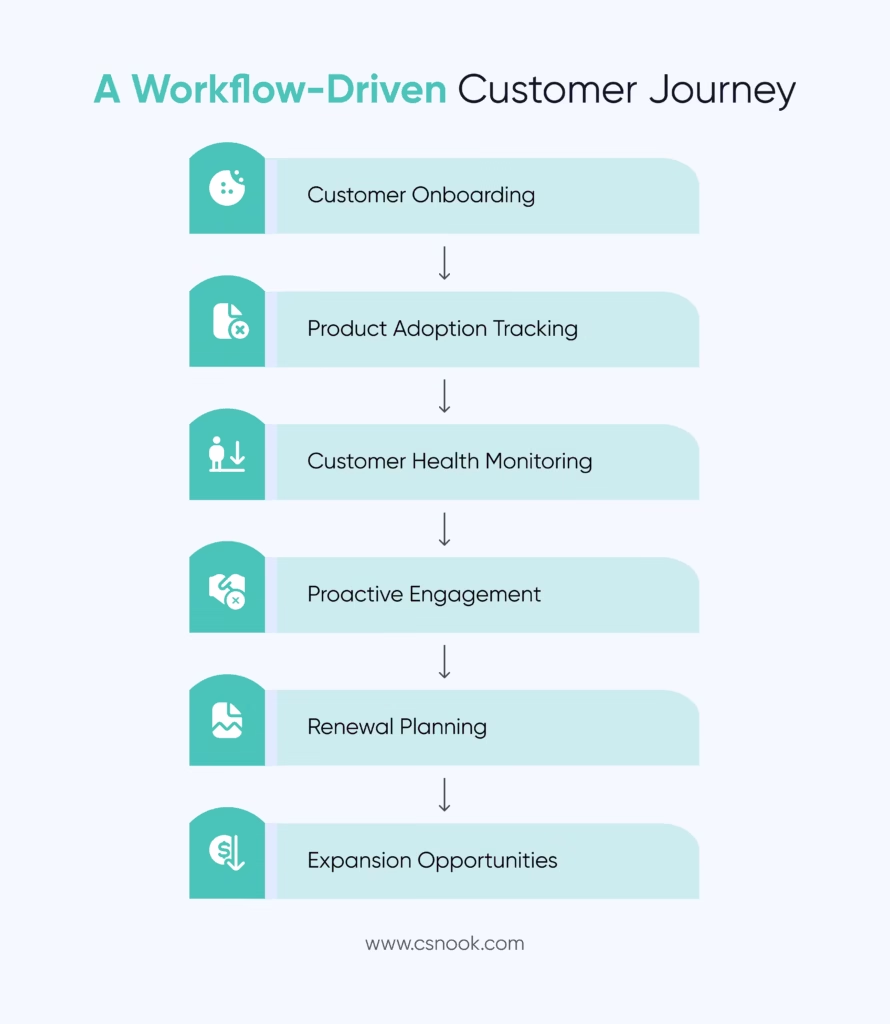
Modern workflow platforms also allow teams to map customer journeys, assign ownership, and track engagement across the lifecycle. This ensures that no customer interaction is left to chance and every stage of the journey is structured and measurable.
How Workflows Make Customer Success Scalable
Let’s look at how workflow solutions transform how customer success teams operate.
They Turn Data Into Actionable Work
Businesses are not just about interactions with customers, but also about data. This data can be that of –
- Product usage
- Engagement rates
- Support tickets
- Customer feedback
But when data cannot lead to any actions, it is of no use. This data would be mere information.
As per reports, data-driven, proactive retention workflows can enable teams to retain 2 to 3 times more at-risk accounts compared to reactive models. Furthermore, implementing automated workflows allows CSM capacity to increase from an average of 22 to 144 accounts by transforming product usage, engagement, and support data into actionable tasks.
A workflow software bridges this gap between action and data. It turns signals into tasks and timelines. For instance –
- A drop in product usage triggers an outreach task
- A milestone completion triggers a recommendation message
- A support ticket pattern triggers a risk alert
When these signals can be understood, teams become proactive. They do not just react to urgent issues.
With proper workflow, trends are spotted on time, even before the customer starts disengaging.
They Standardize Success Plans Across Teams
Inconsistency is a big issue for growing businesses.
Two customers with similar profiles shouldn’t receive completely different treatment just because different CSMs are managing them.
Workflow systems ensure that key processes like onboarding, check‑ins, escalations, and renewals are performed in an organized and structured way. This doesn’t mean interactions should be robotic. Instead, this suggests that there is consistency with flexibility.
Structure should be there, but with a layer of personalization. Through this, customers are provided with a sense of value, which makes them connect with the product or service that is being promised to them.
With workflow-driven platforms like CSNook, teams can create repeatable customer journeys while still maintaining personalization. This ensures that every customer receives a consistent experience, regardless of which CSM is managing the account.
They Free Teams From Administrative Overhead
A CSM’s job is also about coordination between –
- Logging calls
- Updating spreadsheets
- Synchronizing calendars
- Creating follow‑up reminders
These tasks are like an operational burden and do not provide any sort of value. What these repetitive tasks do is eat up the time that could actually be utilized in deriving outcomes.
A workflow software automates these tasks and helps keep everything organised. In this way teams can actually spend their time deepening customer relationships instead of tracking work.
By centralizing customer interactions and workflows, platforms like CSNook reduce manual tracking and help teams operate with better clarity and coordination.
The Bigger Shift: From Tasks to Systems
The shift in the way customer success teams operate does not just revolve around technology but also how the teams proceed with their tasks.
Success is no longer measured by how busy a team is, but by how predictable outcomes are for them.
Customers become champions not when CSMs work harder, but because they can rely on them. They can trust that the company they have reached out to will have the right intention.
Workflow software brings predictability to customer success. It turns fragmented tasks into cohesive journeys. And by doing so, it makes scaling sustainable.
What Scalable Customer Success Looks Like in Practice
With workflow-driven systems in place –
- New customers automatically move through structured onboarding stages
- Engagement drops trigger proactive check-ins
- Milestone achievements prompt value-driven conversations
- Renewal timelines are tracked well in advance
This creates a predictable customer journey instead of a fragmented experience.
Platforms like CSNook enable this structured approach by helping teams track customer health, manage lifecycle stages, and trigger workflows based on engagement signals. Instead of juggling spreadsheets and scattered tools, customer success teams gain a unified view of their accounts and priorities.
To Conclude
Customer success scales with systems and structure. Workflow software ensures that –
- Signals lead to action
- Experiences stay consistent
- Teams focus on strategic relationships rather than administrative chaos
For companies that want to grow without losing the essence of great support and engagement, workflow systems are like a backbone of scalable customer success.
Common Questions
What is workflow software in customer success and how does it improve operations?
In customer success, a workflow like this helps teams automate and organize key processes like onboarding, follow-ups, and renewals. It improves operations by ensuring tasks are completed on time, reducing manual effort, and creating consistency across customer journeys, allowing teams to deliver better experiences without increasing workload.
How does workflow software help customer success teams scale without chaos?
It enables teams to scale by standardizing processes and automating repetitive tasks. Instead of relying on memory or manual tracking, it ensures that important actions happen at the right time. This reduces operational chaos and allows teams to manage more customers efficiently without compromising on service quality.
Why do growing customer success teams struggle without workflow systems in place?
As teams grow, managing multiple customers manually becomes difficult due to increased data, interactions, and responsibilities. Without workflow systems, follow-ups can be missed, onboarding becomes inconsistent, and customer signals go unnoticed, leading to reactive operations and a higher risk of churn.
What are the key benefits of using workflow software for managing customer journeys?
It helps manage customer journeys by providing structure, visibility, and automation. It ensures smooth onboarding, timely engagement, and proactive issue resolution. Teams benefit from improved efficiency, consistent customer experiences, and better prioritization, ultimately leading to stronger relationships and higher retention rates.
Can workflow software improve customer retention and engagement in SaaS businesses?
Yes, workflow software plays a critical role in improving retention and engagement. Tracking customer behavior and triggering timely actions helps teams address issues early and maintain consistent communication. This proactive approach strengthens relationships, enhances customer satisfaction, and increases the likelihood of renewals and long-term growth.


