Many SaaS companies lose customers long before they ever think about churning. Do you know why?
Customer losses occur in silence. A customer signs a new contract and joins the kickoff call, but then gradually disengages. Customers’ logins decrease. They don’t use features that they have purchased. The products that were designed to resolve their issues begin to sit unused.
When it’s time to renew, the decision has already been made.
The harsh reality is that most churn isn’t a result of product or pricing. Most of the time, the churn problem lies with onboarding. This onboarding problem begins in the first few days and continues until the very end of the customer’s last days before their renewal date.
The upside is that onboarding can usually be improved, and improving is done right from day one.
Why Customer Onboarding Is a Retention Problem
For most SaaS organizations, onboarding a customer is typically a technical handoff. You help the customer set up, give them a product walkthrough, send a few welcome emails, and you’re done.
But this is the root problem that is eating away at your retention rate. No wonder the accounts go quiet after the first month.
Onboarding is where the customers form their first real opinion of your product, and we all know how important first impressions are. At this stage, they are already deciding (even if subconsciously) if your product is worth their time, their company’s attention and whether or not they are going to give you any money at renewal.
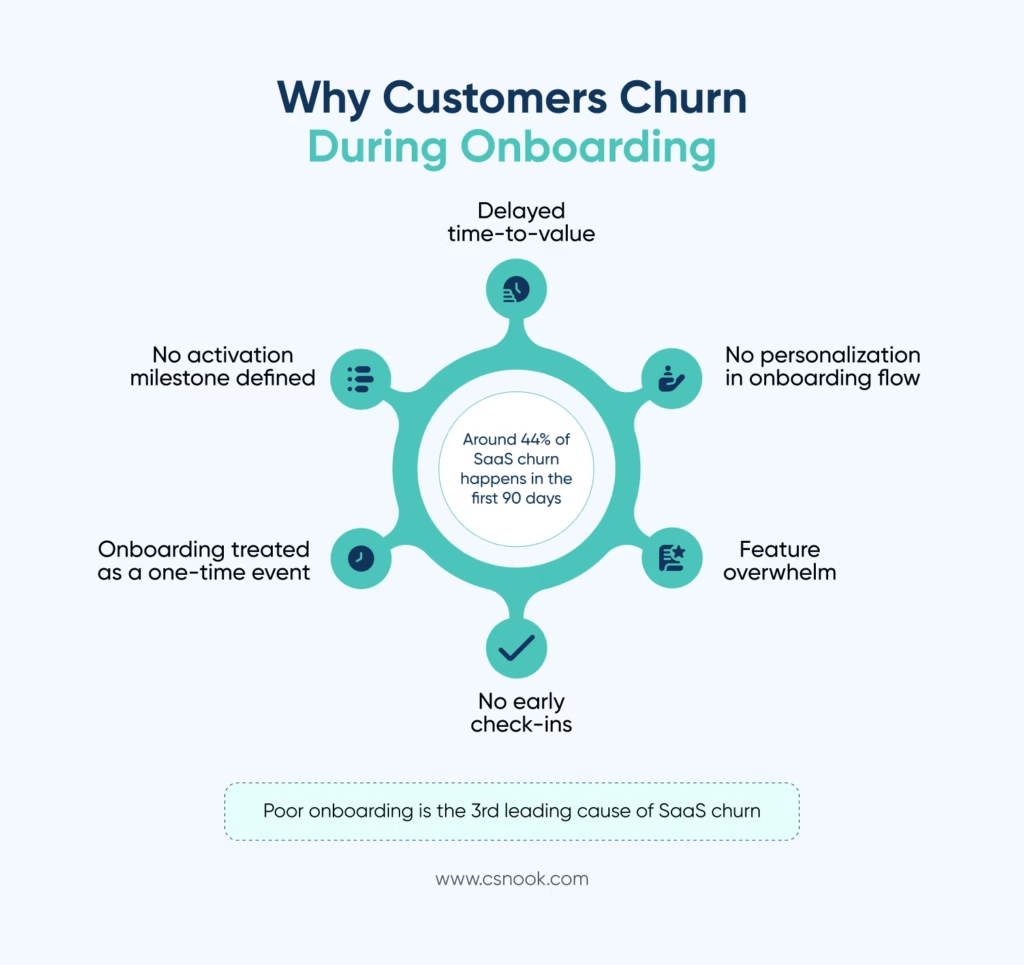
A 44% subscription cancellation rate, that too within the first 90 days. This is an onboarding issue showing up later.
So, what’s the real goal of customer onboarding? Is it just completion? Introducing the product to the customer? Nope. That’s already handled by the marketing team. You need to make clear how the product helps solve the customer’s problems.
Getting customers to their first meaningful win, as fast as possible, is what separates teams that retain from teams that scramble at renewal time.
What is Time-to-Value and Why It Matters
Time-to-value (TTV) refers to the amount of time it takes for a new customer who has just started using your product to achieve their first meaningful outcome. Not just completing the setup but actually feeling the impact.
This is an important metric to evaluate the success of onboarding customers. The faster you get customers there, the more likely they are to stay.
Each unnecessary step from signing up until a customer reaches TTV represents a risk of possible future churn. Every irrelevant product demo, late follow-up, or generic welcome email increases the likelihood of friction, and in the beginning, friction is typically fatal.
The goal isn’t to rush onboarding. It’s to remove everything that delays the moment your customer thinks: “Yes. This is working.” The focus is on achieving customer satisfaction.
The Most Common Customer Onboarding Mistakes
It is easy for teams to get onboarding wrong, albeit unintentionally. The main reason for these mishaps is acting on assumptions:
Treating Onboarding as a One-Time Event
The onboarding process does not stop at the initial kickoff call. It continues until your customer has fully onboarded and can confidently achieve their own success through the use of your product—independently.
What to look out for? Suppose CSM records customers as onboarded. However, they never log in again to use the software or utilize your service. The churn at the time of renewal comes as a surprise, though it was inevitable from the start.
Generic Onboarding For All
Every customer’s goals, team sizes, and use cases can differ quite a bit from each other. Since every individual is different, taking a one-size-fits-all approach will not meet expectations. You need a personalized approach tailored for each individual.
Studies show that a personalised onboarding experience can increase customer retention rates 40% versus a generic approach. Segment your customers at the beginning to create a customized journey.
Overwhelming Customers With Features
You would want to show off every feature your product has to offer, but that’s not actually a good approach. In reality, many customers are likely to want help with just one specific problem initially.
Therefore, giving a new customer a complete tour of your product in their first week will cause confusion rather than confidence. So, start smaller and expand as needed.
How to Build a Customer Onboarding Process That Reduces Churn
Here’s what high-performing CS teams do differently, combining intent with execution.
Define Your Activation Milestone
Be as specific as possible. What does “successfully onboarded” actually look like for your product?
Establish a single definitive action that predicts long-term retention, and make sure every part of your onboarding flow leads your customers to that point. For instance, Slack defines activation as a team sending 2000 messages.
Teams that achieved this number experienced lower levels of churn. Locate your equivalent of this achievement and work back from there.
Personalize the Journey From Day One
At the sign-up stage, ask a few qualifying questions: What is your biggest goal? How many people are in your team? What are you replacing?
According to McKinsey’s Next in Personalization research — 71% of consumers expect personalized interactions, and 76% get frustrated when that doesn’t happen. In onboarding, that frustration doesn’t just create a bad experience. It creates churn.
Use the responses to build an individualized onboarding path for every customer. The more aligned users’ experiences are based on their answers to these questions, the faster they will achieve value from your service and are less likely to drop off.
After onboarding, assigning account managers to handle customer profiles individually can help.
Build in Early Wins After Customer Onboarding
Instead of waiting to create big value moments, focus on helping your clients generate many smaller ones.
A customer who experiences success within the first week will have a greater likelihood of continuing to use the product. With a customer success platform, it’s better to focus on an achievable quick win such as a health score dashboard instead of an entire implementation.
When customers feel a sense of progress, it creates momentum; when there is momentum, customers will stay longer.
Balance Automation with Human Touch
Automate the process of reaching out for welcome sequences, setting up milestone reminders, and sending check-in prompts, usually all the repetitive stuff. It allows your team to spend their time with the customer where it matters most.
When is the right time to add a human touch to your customer experience?
Instances like the first login, the first week and the first value milestone. While customers do not typically require a human at each step, they will require one at important points.
Efficiency at scale doesn’t mean losing the personal touch. It means being intentional about where that touch lands.
Track Onboarding Progress in Real Time
Most CS teams realize that their onboarding process has failed at the first missed check-in or worse, at renewal. By then, it is already too late.
What teams can do instead is to track the frequency of logins, completion of milestones, and adoption of features from day one. Use health scores and other behavioral indicators of a customer’s activity level to track when a customer begins to slow down. Being proactive in reaching out to your customer at the appropriate time can result in you retaining your customer rather than losing them.
What Good Customer Onboarding Looks Like in Practice
To provide an example of a practical application of a structured onboarding program, imagine the following scenario.
A midsize B2B SaaS company signs up a new client, which has a 50-person sales team that used to be with the competitor. Here’s what a structured onboarding would look like:
Day 1: A personalized welcome message based on the client’s specific use case, along with a customized onboarding checklist, is provided, with a focus on achieving their primary goal of tracking pipeline health instead of providing them with a generic product demo.
Day 3: The client’s team has completed their first core workflow, and the onboarding system will automatically send an email to the client to congratulate them on reaching this milestone, along with the next logical step to move forward.
Day 7: The customer’s CSM will check in with the customer by using a health score report to identify two team members who have not logged in yet and to eliminate any friction before it becomes widespread.
Day 14: Usage review reveals strong adoption among senior reps but low engagement from junior members. The CSM shares targeted resources for that segment specifically.
Day 30: The client reaches their activation goal, and an NPS survey goes out, receiving a positive response.
The entire process has gone according to plan without issue. A structured process with the proper human interaction at the proper times has provided the desired results.
How to Measure Whether Your Customer Onboarding Is Actually Working
Having good intentions is necessary, but that’s not enough for customer retention. Here are the numbers worth tracking:
1. Activation Rate
What percentage of new customers reach your defined activation milestone? If the number is low, then you have a gap in your onboarding flow.
2. Time-to-Value
How much time does it take customers to get to their first win? Track this by segment and look for patterns. Longer TTV for the same cohort often indicates a problem with personalization.
3. Onboarding Completion Rate
Do customers complete the onboarding steps you have created? If you see a significant amount of customers dropping off at a given step, that is a sign that you have a problem worth investigating.
4. Early Churn Rate (0-90 days)
This represents your customer onboarding report card. The number of customers dropping off early from your product is a sign that they are not experiencing enough value from your product soon enough.
5. Login Frequency in Week 1
This one is a little sneaky, yet highly predictive. Customers who log in to the app frequently during the first week are much more likely to stick around long-term.
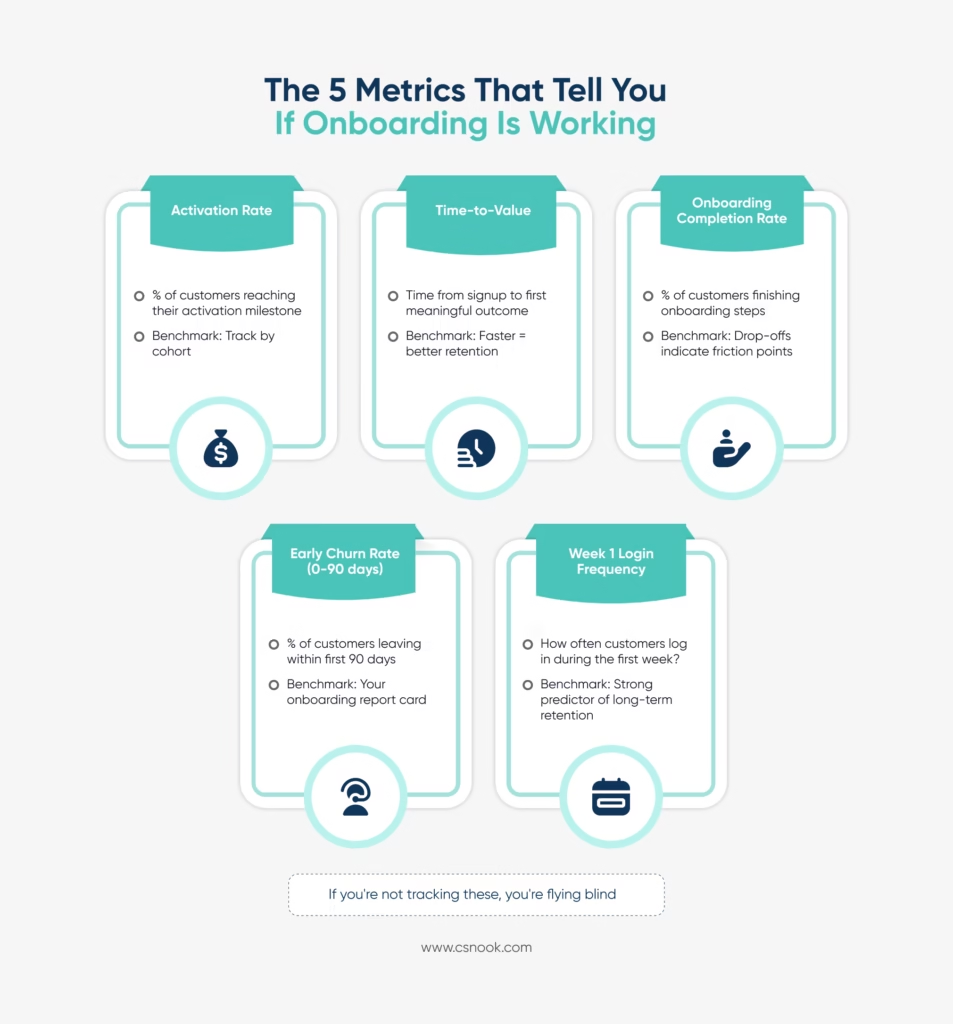
Make sure to consistently track these metrics; look at these metrics together by cohorts. If a given metric is starting to decline, treat that as a signal, not as a surprise.
Conclusion
Churn begins well before renewal; it begins the moment a consumer experiences confusion, a lack of support, or uncertainty about whether or not your product is valuable enough for them to spend time on.
Companies that succeed in retaining customers view customer onboarding as an investment strategy instead of merely a to-do item. They create a clear path to activation, personalize the experience and provide immediate success when completing activation activities, and track customer progress prior to having any service issues arise.
Platforms such as CSNook provide CS teams with the ability to automate and track their onboarding health in real-time, so that all accounts remain visible until they go silent. Because in SaaS, the first 90 days don’t just set the tone. They set the trajectory.
Common Questions
What is the difference between customer onboarding and customer success?
When we talk about customer onboarding, we are talking about a structured process to bring new users to their first milestone of value. The ongoing relationship with your customer after that is called customer success. Onboarding serves as your foundation; without this base, no customer success strategy will have anything to build upon.
How long should the customer onboarding process take for a SaaS product?
It depends on product complexity and customer segment. However, the goal isn’t a fixed timeline—it’s reaching value as fast as possible. Most successful SaaS teams design customer onboarding around activation milestones, not calendar days.
What metrics should I track to evaluate SaaS onboarding effectiveness?
You should also measure activation rate, time to value, customer onboarding completion rate, 90-day early churn rate, and week-one login frequency. These metrics help you identify where customers are dropping out of the onboarding process and which steps in the customer onboarding process need the most focus.
How does poor onboarding contribute to SaaS churn?
When customers’ onboarding is poor, and it takes a long time to achieve value, they are confused and unable to derive any benefit from being customers. Without early wins in onboarding, many customers passively disengage, many times having already decided to leave prior to ever speaking with the vendor about renewing.
What is a customer onboarding checklist, and why does it matter?
A customer onboarding checklist is a set of defined steps created to help new users reach their activation goal. Customers who finish a checklist during their onboarding process reach value faster, engage more deeply, and are significantly more likely to stay long-term.


