When a customer is new, the time immediately after making the purchase is the most crucial. This is the time when the customer gets to actually experience your product or services. They explore the product, learn about the features it provides and understand how the product can be integrated into their workflow.
The customer will gradually develop trust and value the product if they receive proper guidance. However, if this initial process itself is confusing and unstructured, the customer might feel overwhelmed. This can lead to frustrations and make it tough for them to adapt to the product.
This early stage is called customer onboarding and is like a make-or-break stage for a business. It is at this stage that the customer decides whether or not they want to continue to work with the services or use the product. An onboarding software makes this process easier.
What is an Onboarding Software?
According to statistics, 90% of customers feel that the companies they buy from ‘could do better’ when it comes to onboarding new customers.
Conducting onboarding manually is no longer possible after a business has expanded to a certain point. A designated platform provides structure to the onboarding journey, helping customer success teams guide customers more effectively and ensure they begin realizing value sooner.
A software provides a structured workflow. This includes –
- Alignment
- Product setup and configuration
- Training and enablement
- Task tracking and milestone management
- Document sharing and approval
Let us understand how these platforms can help customer success teams do that.
How Onboarding Software Improves Customer Success
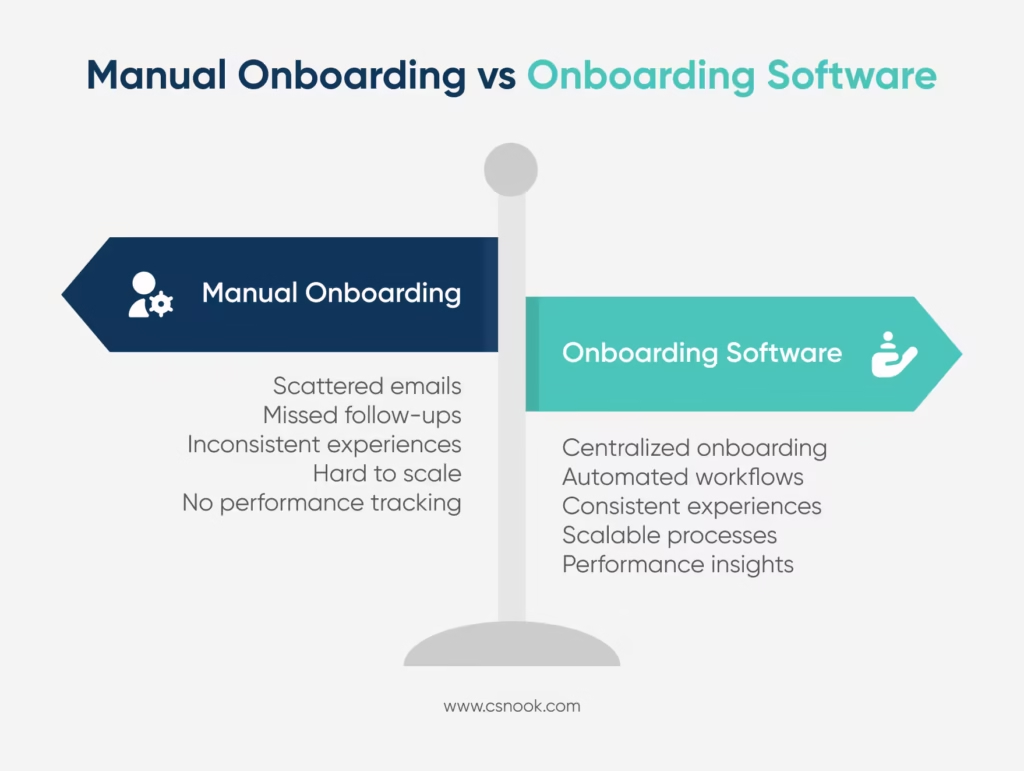
It helps organize tasks, but it is more than that. It becomes the base of how the customer experiences the product in the initial stage. This does not just provide structure but also automation and visibility. In this way, onboarding becomes effective and scalable. Around 63% of customers explicitly consider a company’s onboarding workflow before they even make a purchase
Creating a Structured Journey With Onboarding Software
It is necessary to be consistent throughout the onboarding process, but it is also one of the toughest tasks as well. It becomes tough when each individual proceeds differently with the customer, as it breaks the sense of harmony and unanimity that must be there across the customer success teams.
One customer might receive a well-planned walkthrough, while another might be left to navigate the product with minimal guidance. Onboarding brings structure to this chaos.
As scattered processes cannot be trusted, companies can design their own onboarding journey where the stages are already predefined, as discussed.
By doing this, each step is already set in advance, where –
- tasks
- timelines
- ownership
are assigned from the start. This becomes helpful especially when it comes to scaling.
Let us take an example of SaaS companies for better understanding. They often onboard multiple clients simultaneously. For them, without a structured system, small delays like missed follow-ups and missed setup steps can create an impact.
A strong example of structured onboarding can be seen in how HubSpot guides new users. When customers sign up, they are presented with an interactive onboarding checklist inside the platform. Users are guided step-by-step through actions such as connecting their email inbox, creating their first deal pipeline, importing contacts, and sending their first email. Each completed step unlocks the next, helping users gradually learn the platform while actively using it.
This step-by-step guidance ensures that customers do not feel overwhelmed and can steadily move toward activation.
By introducing this level of structure, onboarding software helps customer success teams deliver a consistent experience, even as the number of customers continues to grow.
Reducing the Operational Load on Customer Success Teams
A sense of coordination should not just be there among the teams, but also in the multiple tasks that are part of the onboarding process. It is small tasks like –
- Scheduling calls
- Sending reminders
- Tracking progress
- Collecting documents
that may seem simple at first, but are actually tedious. They become an operational burden as the business scales. Every company wants a huge volume of customers, but they should also have the caliber to handle these customers.
Onboarding software automates everything in a way that makes coordinating these tasks easier. Here, one does not have to make manual follow-ups every day; instead, they will be notified about the tasks that are pending.
Templates ensure that onboarding flows are consistent. Documents and approvals can be handled within a single platform instead of being scattered across emails.
Onboarding tasks are mostly repetitive, which makes it time-consuming for customer success managers. When there is proper software for this, teams can actually spend on tasks that need more attention, like –
- Customer goals
- Guiding adoption
- Solving real problems
Helping Customers Reach Value Faster
Time-to-value is a critical element of the onboarding process. Customers want results, and the sooner they see it, the better it is for the business as well as the customers. And if it takes longer to see the desired outcomes, the more disengaged they get.
An onboarding software eliminates this form of friction.
- Customers get step-by-step guidance
- They get access to the right resources, and that too on time
- Customers don’t have to wait for instructions; they can instead move forward independently
If we take the example of Canva. We can see that the users are not presented with blank screens the first time they encounter the platform. Instead, they are guided through templates, quick actions and prompts that are easy to understand.
Similarly, SaaS products that use guided onboarding flows or in-app walkthroughs allow users to achieve their first meaningful outcome much faster.
It is also important to keep a note of the fact that speed matters. When customers quickly see results, they are far more likely to stay engaged and continue exploring the product.
Turning Onboarding into a Source of Light
Incorporating an onboarding software with your business also makes it a source of data.
Since onboarding is the stage where a user is most likely to get stuck, it becomes the stage that requires the most attention. When accounts are managed manually, it becomes difficult to pinpoint where the customer is actually struggling.
While some teams rely on narrative feedback, they forget to keep a note of patterns that must be paid attention to.
An onboarding software provides details of every stage. Teams can hence keep track of –
- How long onboarding takes
- Where delays occur
- Which steps are frequently skipped
- How engaged customers are throughout the process.
For example, if the software shows data that customers are getting stuck or dropping off at a specific step, the team should take note of it and take it as a signal that there could be a potential problem.
Maybe the step is too complex, not explained properly, or might require additional support.
Companies like Intercom use onboarding data and user insights to continuously refine their onboarding flows, ensuring that users are guided more effectively over time.
Where Onboarding Software Fits Within the Customer Success System
A software like this is necessary, but it is only a part of the bigger picture of customer success.
Once the customer onboarding process is complete, the focus shifts to the sustenance of those customers. Businesses must ensure that their customers are –
- Actively using the product
- Adopting key features
- Continuing to receive value from the offered products and services
This is where customer success softwares come in.
- They track product usage
- Monitor engagement signals
- Help teams identify potential risks early
In simple terms –
- Onboarding software helps customers get started. It creates the pathway.
- Customer success systems ensure they keep progressing and keep moving on the path.
When the two come together, a system is formed. This is where a connection between initial activation and long-term connection is formed.
To Conclude
The onboarding experience often defines how customers perceive a product in its earliest stages. A smooth, well-structured process builds confidence, while a confusing one can create friction that is difficult to recover from.
Onboarding software helps companies bring order to this critical phase. By structuring workflows, automating coordination, and providing visibility into progress, it turns onboarding into a scalable and repeatable system.
For customer success teams, this means less time spent managing tasks and more time focused on delivering value.
Common Questions
What is onboarding software and how does it improve customer success outcomes?
Onboarding software is a platform that structures the customer onboarding process through workflows, task tracking, and automation. It improves customer success by helping users reach value faster, reducing confusion during setup, and ensuring consistent onboarding experiences that lead to higher adoption, retention, and long-term engagement.
How does onboarding software reduce churn in SaaS and service-based businesses?
It reduces churn by guiding customers through a clear path to early success. When customers quickly understand and use a product, they are less likely to drop off. Structured onboarding eliminates friction, ensures timely support, and helps customers experience value before disengagement sets in.
Why is structured onboarding important for customer retention and growth?
Structured onboarding ensures that every customer follows a defined journey toward product adoption. It reduces inconsistencies, prevents missed steps, and builds confidence early. When customers achieve quick wins and understand the product clearly, they are more likely to stay, expand usage, and contribute to long-term business growth.
What features should you look for in onboarding software for customer success teams?
Some of the key features to look for include workflow automation, task and milestone tracking, in-app guidance, integrations with CRM tools, and analytics dashboards. These features help teams manage onboarding efficiently, track customer progress, and identify bottlenecks that may impact adoption and customer satisfaction.
How does onboarding software help improve time-to-value for new customers?
It improves time-to-value by guiding customers through step-by-step processes and reducing delays caused by manual coordination. With automated workflows, contextual training, and clear task visibility, customers can activate their accounts and experience product benefits faster, increasing engagement and long-term retention.


