‘Building strong relationships with customers” is the motto of every business. Every business hires dedicated teams to make sure the motto is followed through.
This is followed by the conversation of “Do we need account managers or customer success teams? Or both?” Not just this, the terms are also often used interchangeably. This is what should be avoided. Since we already know what a customer success manager does, this article breaks down what an account manager does and how they are different from the former.
Who is an Account Manager?
An account manager (AM) is a post-sale bridge between a client and the company. After the deal is signed and the customer is onboarded, the AM comes in to maintain the relationship with the customer by –
- Handling renewals
- Identifying upsell opportunities
- Making sure the account stays profitable for both sides
To put it in simpler terms, if sales is hunting, then account management is farming. The goal is not to keep fetching new customers or clients but to cultivate and grow the ones that already exist.
Key Responsibilities of an Account Manager
The day-to-day responsibilities of an account executive include –
- Running quarterly business reviews – It is the structured check-ins that help keep a track of clients’ progress and then align them with their goals accordingly.
- Negotiating renewals and pricing – Contract cycles should be managed before they start to come under the stage of churn risks.
- Identifying upsell and cross-selling opportunities – Moments where the client could benefit from additional products or higher tiers should be taken into consideration.
- Acting as the primary escalation point -If something goes wrong, the AM should be the go-to person for the client who provides them the resolution path.
- Collaborating cross-functionally – AM is expected to work and coordinate with the sales, product, success, and finance teams to ensure that the client is provided with the commitment they were promised.
The demand for the role is for such individuals who can think commercially but lead with the relationship at the same time. They aim to close deals too, but not just for the sake of it. The purpose is to grow accounts.
If we look at a common enterprise scenario, then let us say a mid-sized software company is approached by a business and signs the contract. By the third year of the alliance, the account value of the business has doubled in value. The main role played here was by the account manager. They tracked the client’s evolving needs and positioned the right upgrades at the right time. This is what the intention of their work should always be.
KPIs That Actually Matter for Account Managers
Account management performance cannot just be measured by whether a client renewed or not. A telecom firm saw a 15% rise in customer satisfaction and a 12% increase in key account revenue after implementing key account management.
The metrics have become more sophisticated instead, as they should be.
Revenue Retention Metrics
The two most critical metrics today are –
- Gross Revenue Retention (GRR) – It measures how recurring revenue is retained from existing customers, minus any expansion.
- Net Revenue Retention (NRR) – It accounts for upsells, cross-sells, and churn to show if the business is actually growing.
As per research by Forrestor, acquiring a new customer costs five times more than retaining an existing one. This is why NRR is one of the strongest indicators of the level of account management performance. At the end of the day, it is the numbers that tell you whether the farming is working or not.
Some Other KPIs to Consider
- Renewal Rate – The percentage of expiring contracts that convert to renewals
- Account Revenue Growth – Whether the total value of an account is increasing over time
- Upsell Rate – The percentage of customers upgrading to higher plans or purchasing additional features. A rising upsell rate often reflects increasing trust and growing product maturity within accounts.
- Cross-Sell Rate -This tracks how often customers adopt additional products or services. Cross-selling indicates that customers see broader value in your ecosystem, which strengthens retention.
- Product Adoption Rate -This measures how actively customers use key features. Higher adoption usually correlates with stronger retention, as customers who rely on multiple features are less likely to churn.
Account Manager vs. Customer Success Manager
The roles might seem similar, but the two are actually different and serve their own separate purpose. Let us understand how, because using the two interchangeably can hurt your business.
How are they similar?
- Both roles are client-facing.
- Both care about retention.
- Both act as a key point of contact for customers.
It is the goals and responsibilities that make them diverge.
- An account representative is like a financial advisor. They make sure the client invests wisely, grows money, and continues the business relationship.
- The customer success manager is the personal coach. They help the client actually win, get results, and feel confident. When the client succeeds, growth and renewals happen naturally.
According to a Salesforce report, 80% of customers consider the experience a company provides to be as important as its products and services. This data highlights a significant shift in customer expectations towards personalized, high-quality interactions.
Account Manager
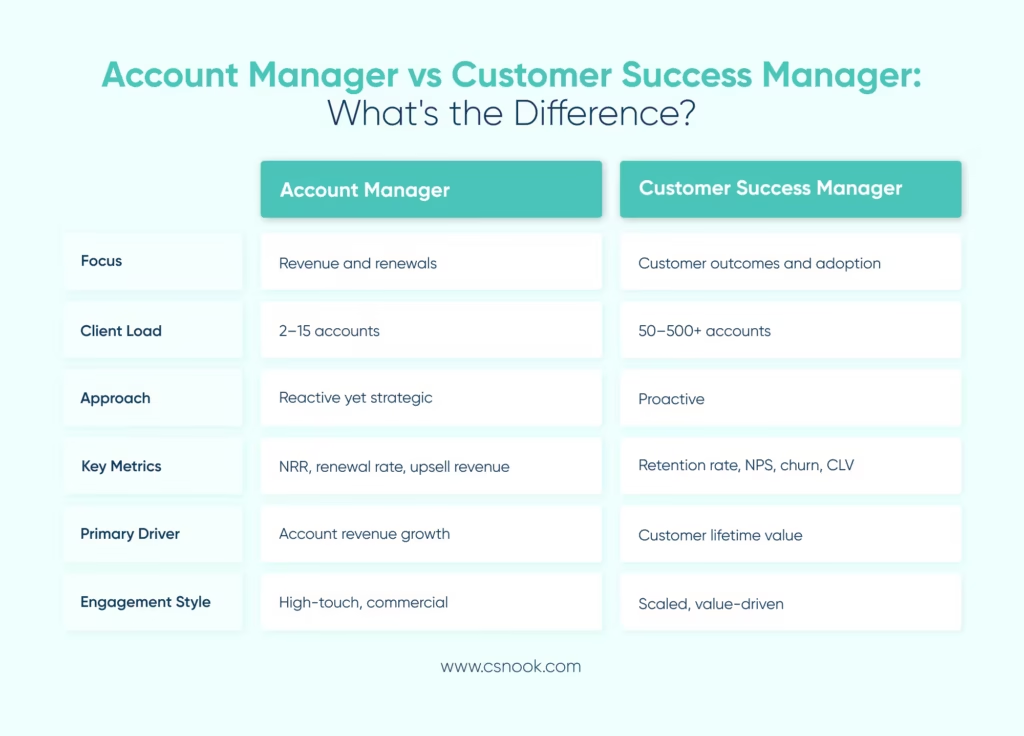
- An account executive’s success is measured by whether accounts renew, expand, and stay profitable.
- They manage a smaller number of high-value clients because their relationship is deep, high-touch, and commercially focused.
- Their strategies are driven by sales goals and financial metrics.
Customer Success Manager
- A customer success manager’s (CSM) job is to make sure customers actually achieve what they set out to achieve when they bought the product.
- CSMs are more proactive.
- They anticipate customer needs before they arise, monitoring usage data and engagement patterns to catch problems early.
If an account manager spends their week preparing for a renewal pitch for a high-value client, then the CSM would be spending that time in building a health score. Their purpose is to identify which of their multiple accounts are close to churning, before the clients come to a final decision.
Why the Differentiation is Necessary
The blurring of the roles of account managers and customer success teams will only lead to dysfunction.
Let us say that an account manager is responsible for –
- Onboarding
- Product training
- Product adoption
On top of managing –
- Upsells
- Renewals
They are over-assigned with expectations, and this can lead to a fall apart of renewals and client relationships.
- Renewal conversations can get delayed when the AM would be too busy firefighting adoption issues.
- Clients feel like a mere number when they are provided with reactive and transactional check-ins instead of proactive relationship-building that actually builds loyalty.
- Upsell opportunities get missed when the AM does not have the bandwidth to spot expansion signals on time and they eventually turn cold.
To Conclude
Account managers and customer success teams do not have the same jobs with different titles.
- One is built around growing revenue from existing accounts.
- The other is built around making sure customers actually see value from what they bought.
Both matter. Both require distinct skills, distinct KPIs, and distinct ways of engaging with clients.
The companies that struggle are usually the ones that blur these lines. They expect one person to do both jobs, or worse, assuming the roles are redundant.
The companies that thrive are the ones that let each function do what it was designed to do.
Common Questions
What skills are required to become a successful account manager in SaaS businesses?
A successful account manager requires a blend of commercial awareness, communication skills, and strategic thinking. Their main role is to understand customer business goals, negotiate effectively, and figure out the opportunities for growth. They must have strong stakeholder management and an ability to balance relationship-building with revenue responsibilities. It is only by possessing these qualities that the account management team can succeed.
How does an account manager contribute to long-term customer retention?
An account manager contributes to retention by maintaining continuity in engagement, identifying risks before time, and aligning solutions with evolving customer needs. They should not just wait for renewal periods. Instead, they must build an ongoing value perception and ensure that the customers can see the continued ROI and have clear reasons to stay with the business.
When should a company hire an account manager instead of expanding the customer success team?
A company should consider bringing in an account manager when the focus starts shifting toward growing existing revenue and managing contracts more strategically. If customers are already seeing value but opportunities to renew, expand, or optimize pricing are slipping through the cracks, it’s a clear sign that a more commercially focused role is needed.
How do account managers identify the right time to upsell or expand an account?
Account managers usually keep an eye on small but important signals, like when a customer starts using the product more, the company begins to grow, or their goals start evolving. They also notice when something is missing in the existing setup. The best upsell moments come naturally from these situations, where the next step genuinely helps the customer, rather than feeling like a forced sales pitch.
What challenges do account managers face when handling high-value enterprise clients?
Managing enterprise clients involves navigating multiple stakeholders, longer sales cycles, and higher expectations. Account managers must balance strategic planning with responsiveness, ensuring alignment across teams while maintaining trust. Miscommunication or delays can have significant revenue impact, making precision and consistency essential.


