Escalated customers are customers who have a high likelihood of churning. This is no news to many SaaS executives. Escalations frighten them as they consider them failures, periods when something went wrong and they were unable to mend it.
But the truth is that most of them are preventable. They don’t just come out of nowhere. They have a pattern that can be avoided after being identified.
This article will help you understand what these are, why they occur, and how to prevent them from happening.
What is an Escalation in Customer Success?
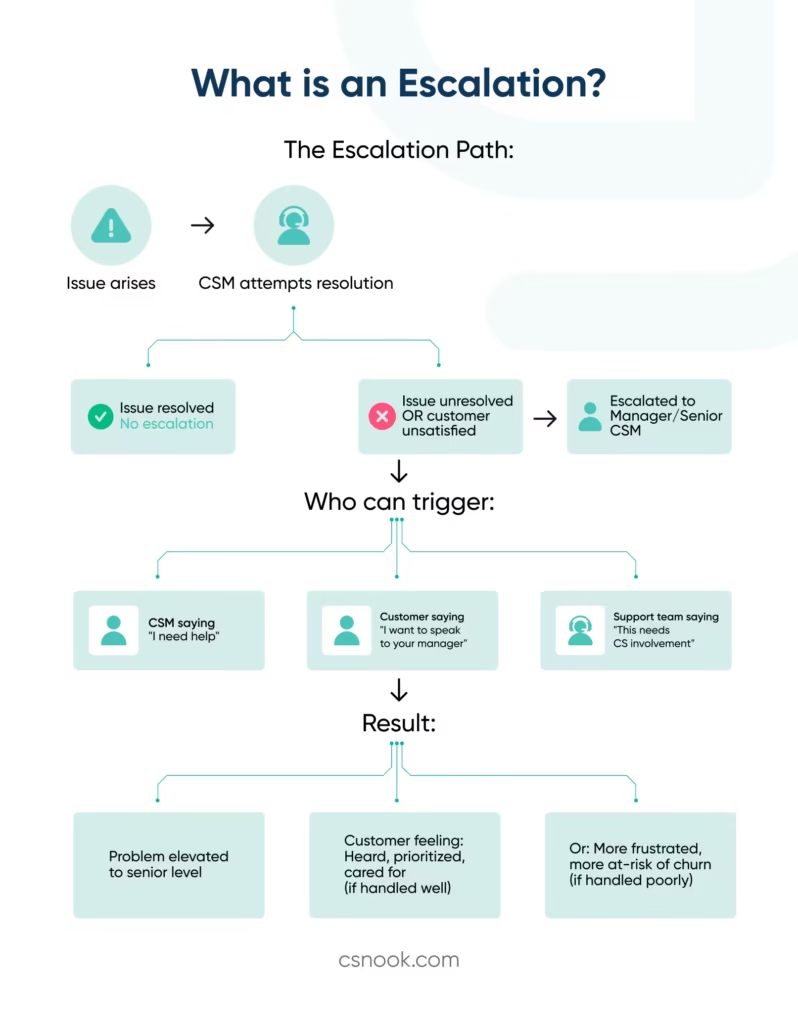
A customer success escalation refers to when an issue that a customer is facing gets referred from one team member to a more senior-level person or department.
Consider it to be a sign that states, “the issue has not been solved at this level and needs to go up.”
Who triggers an escalation?
Escalations can be initiated via CSMs (“I need assistance with this issue”), customers (“I would like to chat with your supervisor”) or other team members who notice a problem that is beyond their reach.
What causes an escalation?
Most often, it can be one of four reasons:
- The current person is unable to solve the problem
- The customer is unhappy with the answer
- The problem does not get solved as fast as it should
- Or it is urgent and requires immediate senior intervention
A real example: A client can’t use a feature that was supposed to work. The customer success manager checks it out, only to find out that it needs to be enabled in the first place — something the customer success manager should already have known during onboarding. The client is unhappy with the whole situation and takes it up to the account manager. Thus, a simple configuration issue turns into trouble in professional relations.
The good news? If these are managed properly, they may become the basis for a restoration of the lost trust.
Why Escalations Happen
Most of them aren’t just random. They occur in the form of predictable patterns and knowing about them can aid in preventing most supervisor routing.
Miscommunication and Expectation Mismatch
Many case handoffs originate during the onboarding process when both parties fail to align their expectations from the first day itself.
In this case, the customer thinks he’s getting feature ‘X’, only to learn that some steps need to be followed before he can do so. In another scenario, the customer believes that the Customer Success Manager has said that the ‘dashboard is available’ and thus becomes confused when he can’t find it.
The solution is to always let customers know what they are receiving and when they will receive it.
Delayed Response Times
Customers escalate cases when they feel they have been ignored. A response that is given in 2 hours seems like a minor problem. A response in 2 days means an escalation.
People don’t escalate because they are impatient. They escalate because lack of communication makes them feel abandoned.
Lack of Ownership
The customer’s issue keeps changing hands between customer support and the customer service departments. Nothing gets done about it, as no one takes responsibility. The customer ends up escalating the issue out of frustration.
Unresolved or Recurring Issues
The same issue occurs multiple times as the original one is never resolved, just covered up with quick fixes. Understanding the reasons behind such issues can help eliminate repeats of the same problem.
The Cost of Escalations
Supervisor routings cost a lot of money. They waste resources, break relationships, and increase churn rates.
72 per cent of clients leave for a competitor after one negative incident. An escalation is precisely that — an occasion when a client felt cheated.
But here’s the real cost:
It’s not merely the obvious cost, but also the damage created by losing trust. Even when you manage the situation, it does not change the fact that the client is going to remember being ignored by you in the past.
The client may stay with you but will not be willing to continue using your services in the near future and spread their unbelievably negative experience about your services to others.
The advantage:
If managed properly, they can reinforce connections. In the aftermath of a serious escalation, a consumer could find that their issue is being taken seriously at the higher levels of management, leading to greater trust in the company.
This is the chance given. Most groups see an escalation as a loss. Intelligent groups perceive them as an opportunity to show they care.
How to Avoid Escalations
It is possible to prevent an escalation in most situations. Escalation is not something beyond the control of nature but rather something caused by gaps in communication, speed, or ownership. So by eliminating these gaps, the case handoffs will simply disappear.
Manage Expectations From Day One
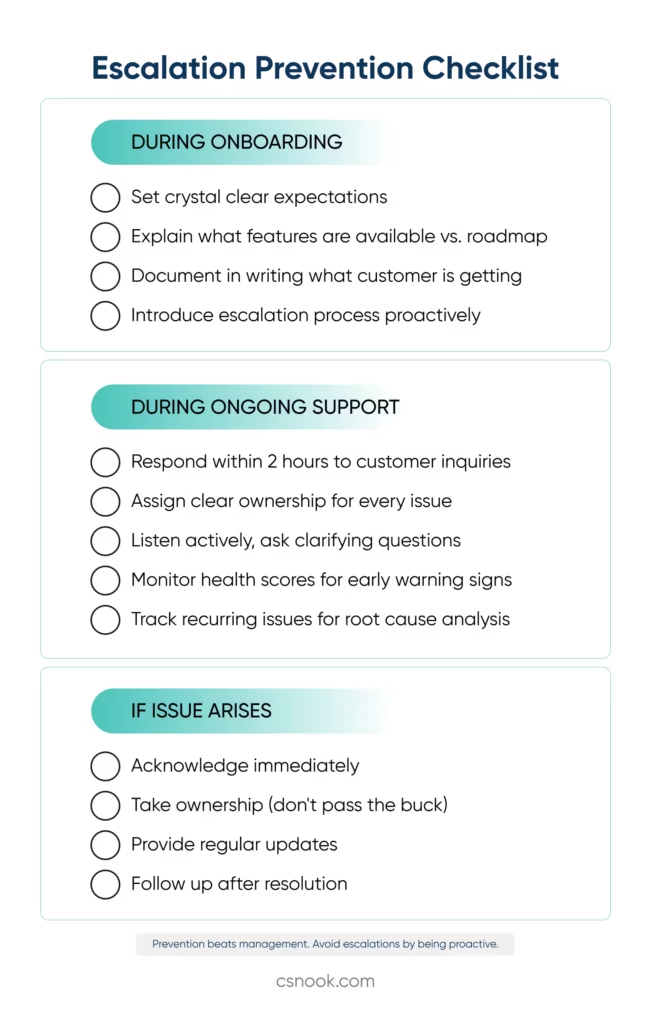
The process starts at onboarding. Be clear and honest about what customers will receive.
Never promise more than what is possible. It is better to promise less and deliver more than to falsely inflate a certain option that is not yet available. Clearly differentiate between “available now” and “available in x weeks” or “part of the plan for Q3.”
Respond Fast
Response time is the most important tool to prevent escalation overall. A 2-hour response will resolve most complaints before they can escalate. A 2-day response? That’s an escalation ready to happen.
The best way to avoid escalations is by framing a clear SLA, issuing reminders concerning that SLA, and ensuring you stick to your promise.
Listen Actively and Ask Clarifying Questions
Many supervisor routing occurs due to the lack of complete understanding of the first issue.
Follow up with questions. Avoid making assumptions. Restate what you heard earlier: “What I’m hearing is…”. This simple act can prevent possible misunderstandings that could lead to escalation.
Monitor Health Scores Proactively
It is not wise to wait for supervisor routing in order to identify problems. One needs to monitor health scores and engagement metrics regularly. Monitor any decline in usage, the patterns of support tickets, or low NPS scores as early warning signs.
Take Ownership and Own the Handoff
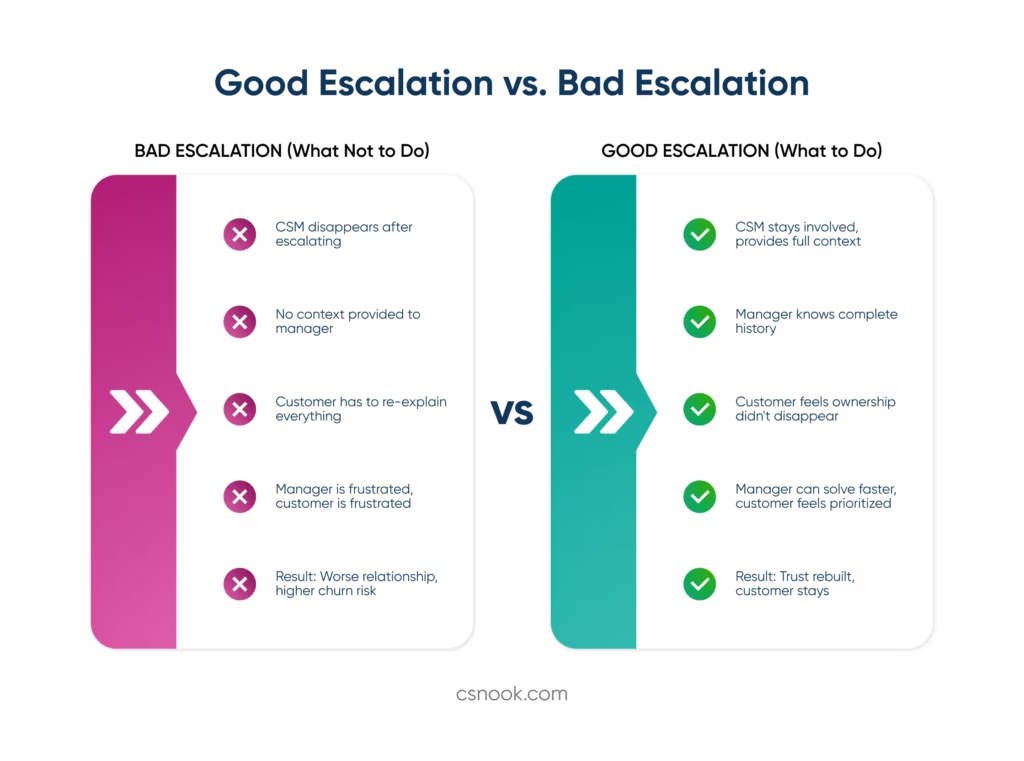
When escalating to a manager, give them everything, do not disappear. 56% of customers have to re-explain an issue when speaking to customer service, and that friction alone escalates frustration. Don’t make them dig or ask clarifying questions. That wastes time and frustrates the customer more.
Instead, be present. Make sure that you have given the appropriate context to the team to whom the issue is being escalated. Introduce the person that it is being escalated to if possible. Help prevent the feeling of starting from scratch.
How to Handle Escalations When They Happen
The best option is prevention. But sometimes, situations worsen. The solution depends on how you manage the situation, thus affecting whether trust is restored or customers leave.
Acknowledge Immediately
The customer must receive a statement within an hour from someone. “I hear what you’re saying. I’ll make sure a senior person is involved.” Just acknowledging the customer goes a long way in their feeling of not being left out.
Show Empathy, Not Defensiveness
Don’t provide justifications. Don’t point fingers at policies and systems. Take responsibility for the problem. “You were wronged. We’ll fix it.”
Provide Full Context on the Handoff
When escalating issues to the supervisor, give them everything:
- the complete record of conversations,
- steps taken,
- things that failed,
- and the customer’s feelings.
Don’t make the manager dig up everything on their own — this is time-consuming and adds to customer dissatisfaction.
Keep Communication Clear
Steer clear of jargon. Describe what happens next and when. For instance, “We are looking into this and will have an update tomorrow at 2 p.m.” Direct communication is always superior to vague statements when handling escalations.
Maintain Ownership
The original CSM does not become irrelevant. You remain in the picture. You will always be part of the process.
Follow Up After Resolution
As the escalation is already closed, don’t turn away from the client. Make sure everything with the issue is solved and ask for the customer’s opinion on the matter.
Final Thoughts
Escalations are not an unavoidable reality. On the contrary, most of them can be avoided thanks to preemptive communication, timely responses, sincere compassion, and obvious accountability.
The best approach to escalation is not to learn how to handle them comfortably when they arise but to find ways to avoid them altogether.
Begin with laying down the guidelines. Be quick when addressing the requests. Listen to what the customers have to say. Stay alert to possible developing situations. And if the time comes for escalation, don’t abandon it but stay involved at all the stages till the very end.
There you have it. Now that you know the key points in avoiding them, you can keep your customers satisfied and loyal.
Common Questions
What is an escalation in customer success?
Escalation refers to the process of advancing an issue to someone with more authority than oneself, meaning the current level of management cannot resolve the problem or the customer is unhappy. If handled correctly, escalations can restore confidence in the organization and improve relationships.
What are the main reasons customers escalate issues?
The escalation process is caused by four root causes, namely expectation gaps, poor response time, lack of accountability and unresolved repetitive problems. By establishing what the root cause is we can make sure that it does not happen again and keep customer satisfaction levels high.
How does slow response time trigger escalations?
When consumers believe that they are being dismissed, they become angry. A response period of under 2 hours will avert the panic. If you take 2 days, you will cause it. Not responding makes it seem that you are forsaking them. It is essential to set up SLAs and adhere to them regularly.
What’s the cost of escalations in customer success?
According to statistics, a significant percentage of people switch to competitors because of only one negative experience. Bad case handoffs ruin relationships with clients, increase the time spent by managers, and waste customer service resources. Being proactive and communicating with customers allows businesses to minimize handoff costs.
How do you prevent escalations from happening?
To prevent escalations during onboarding, handle expectations appropriately, reply within two hours, listen, track health scores to detect early signs of trouble, and take ultimate responsibility for the issue. Preventing escalations is mainly a matter of timely and clear communication combined with sincere empathy.


